Showing posts with label Memoirs. Show all posts

Friday, May 20, 2016

Dirt Candy: Roasted Carrot Buns

Dirt Candy: A Cookbook. Flavor-forward Food from the Upstart New York City Vegetarian Restaurant
By Amanda Cohen and Ryan Dunley, with Grady Hendrix
Charlotte Potter Publishers, 2012, 224 pages

I don't normally review cookbooks here, but I made an exception for Amanda Cohen's Dirt Candy, because it is absolutely unique: part recipe book, part graphic novel, part vegetarian manifesto, it doesn't apologize for its hybridity, but instead embraces it. The result is both fun and invigorating.


I am not a vegetarian, and neither is anyone in my family. But, like many, I am trying to reduce the amount of meat we eat. I limit red meat, trying to feature chicken or fish when possible, which is easy enough. But doing without animal flesh altogether is more of a challenge. I personally like beans and pulses, but not everyone at home does. Once you eliminate those, it's hard for me to think of filling vegetarian dishes that aren't pizza, pasta, risotto, or some sort of root vegetable gratin. Which I guess isn't too bad, but it gets to be a lot of carbs and/or cheese.


Saturday, September 26, 2015

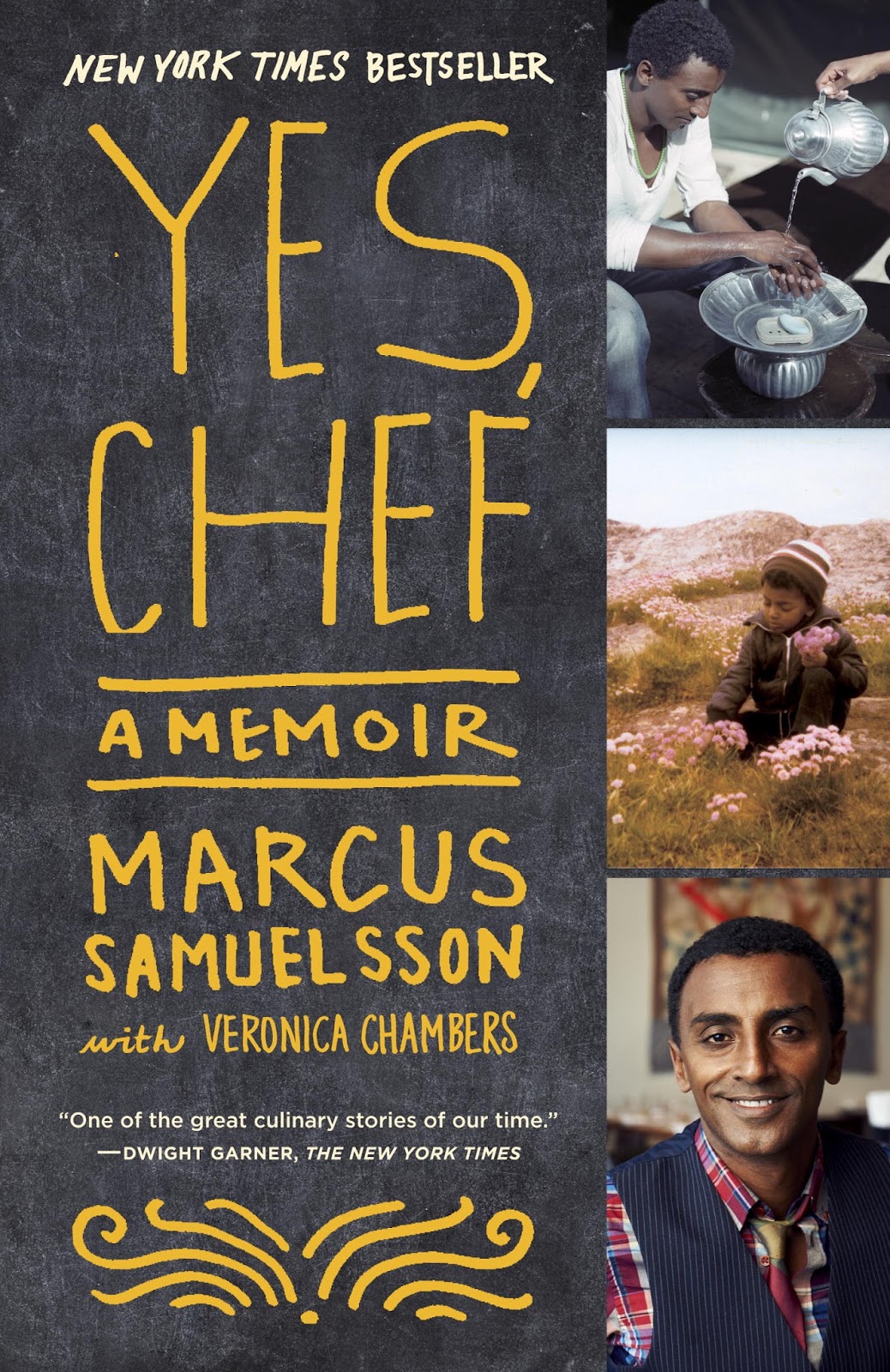
Yes, Chef - Gravlax

Yes, Chef: A Memoir
By Marcus Samuelsson and Veronica Chambers
336 pages, Random House, 2013


Chef memoirs can get repetitive after a while. The chef-to-be is initiated to the pleasures of cooking at a young age, either by an untrained yet gifted older relative, or through a multitude of influences. They go on to study in some culinary institution, where at some point they are yelled at, then do grunt work in a kitchen, where they get yelled at some more and learn to deal with the gruelling physical labour and surrounding machismo that come with the job. Then comes the reward, in some form or another, for all their hard work and daring.


I am, of course, exaggerating. Yet the chef’s journey, by this point, has become familiar to most readers interested in the genre. How, then, can one stand out? After all, not everyone has Gabrielle Hamilton’s insight and talent, or Anthony Bourdain’s bravado. Marcus Samuelsson’s memoir, Yes, Chef, stands out through the sheer uniqueness of its author’s personal journey, as well as the warmth and family love that pervades it.

Monday, April 27, 2015

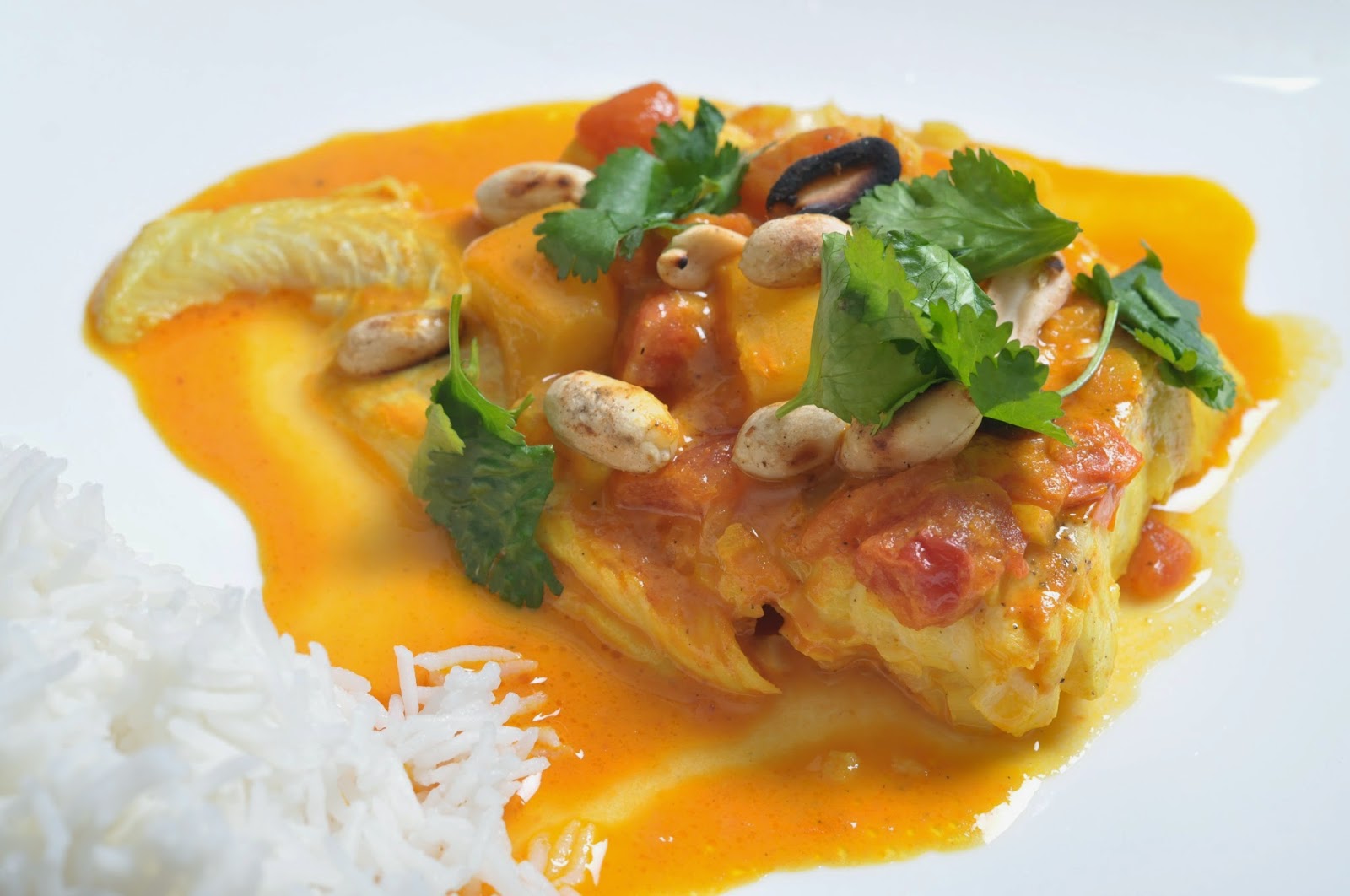
The Sharper Your Knife, The Less You Cry- Fish in Fragrant Coconut Sauce

The Sharper Your Knife, The Less You Cry: Love, Laughter and Tears at the World’s Most Famous Cooking School in Paris
By Kathleen Flinn
304 pages, Penguin Books, 2007


I have always known I could never cook professionally. I lack the drive and the discipline, not to mention the palate. More importantly, I have no wish to turn yet another hobby into a job, because jobs can turn into chores, and I have enough chores in my life. 

And yet… Who, among those of us who love to cook, hasn’t daydreamed about going to a culinary academy, of learning how to really do things properly, and eventually earning one’s living brightening people’s day thanks to bold flavours and luscious textures? Even though we’ve read Kitchen Confidential and know how tough cooking professionally is, we still hold on to that vision of the radiant, fulfilled culinary student, happily whisking meringue in her luminous kitchen.

Kathleen Flinn turned her daydreams into reality in 2005, when she lost her job and made the spontaneous decision to attend Le Cordon Bleu culinary school. Predictably enough, reality turned out to be much harsher, but The Sharper Your Knife is ultimately more fond reminiscence than cautionary tale.


Friday, February 13, 2015

Toast: The Story of a Boy's Hunger - Jam Tarts

Toast: The Story of a Boy’s Hunger
By Nigel Slater
247 pages, Fourth Estate, 2003


If there is one thing Nigel Slater’s memoir makes clear from the beginning, it is that we do not necessarily love the foods of our childhood because they tasted good objectively, or were well prepared. Case in point: his mother, described as “not much of a cook,” served him burnt toast every morning. Despite that, Slater writes:

“It is impossible not to love someone who makes toast for you. People’s failings, even major ones […], fall into insignificance as your teeth break through the rough, toasted crust and sink into the doughy cushion of white bread underneath. Once the warm, salty butter has reached your tongue, you are smitten. Putty in their hands.”


This opening page sets the tone for the remainder of this beautiful memoir. Slater, a British food writer and journalist, recounts his childhood in 1960s England through the prism of food. The book is organized into vignettes, most of which revolve around a specific item of food, from tinned ham to prawn cocktail. But food, however central it is to the book, also works as both a backdrop to Slater’s mostly unhappy childhood and as a path into the most intimate nooks of his memories.

Saturday, November 22, 2014

The Telling Room - Salted Almonds

The Telling Room: A Tale of Love, Betrayal, Revenge, and the World’s Greatest Piece of Cheese
By Michael Paterniti
368 pages, Random House, 2013


An entire book, and a rather longish one at that, revolving entirely around a single cheese? How could I resist?

The Telling Room’s author, Michael Paterniti, may have started off writing this book as an outside observer, but the resulting book is a deeply personal one – and good thing, too, because I believe that is what ultimately saves the book.


Paterniti first reads about Pàramo de Guzmàn, the fabled Spanish cheese in the title, as a college student in the early nineties. Although he cannot afford to taste this wonder himself at the time, he is struck by the description of the cheese’s fabrication, a painstaking process filled with care and patience, led by a single old-fashioned cheesemaker in a tiny village in the Spanish region of Castile. The projected purity of the finished product makes a lasting impression on the author.

Friday, September 19, 2014

Tender at the Bone - Chicken Liver Pâté

Tender at the Bone: Growing Up at the Table
By Ruth Reichl
289 pages, Random House, 1998

Photo by Aurélie Jouan
Ruth Reichl’s memoir Tender at the Bone ranks among my very favourite food memoirs, and among my favourite books. For many reasons. For one thing, it’s beautifully written in the kind of voice that makes me wish I were friends with the author. For another, it superbly describes the way food can shape the everyday lives and relationships of those who open themselves to it. There are many objective reasons to like this book (inasmuch as there is such a thing as objectivity in the reading experience). But many of the reasons I loved it are actually intensely personal.

Before I continue, you may notice that the photos in this post look much, much better than usual. This is because a friend of mine, the very talented Aurélie Jouan, was kind enough to come over for a photo shoot. I’m so grateful to her, especially since I made her shoot pâté, which is perhaps the least photogenic dish ever. And she still managed to make it look good! You can check out her work at www.aureliejouan.com.

Friday, August 15, 2014

Steal the Menu - Sole meunière

Steal the Menu: A Memoir of Forty Years in Food
By Raymond Sokolov
242 pages, Knopf, 2013


Instantly drawn to this book because of its title, I knew nothing about its author. Turning to the cover flap for enlightenment, I saw that he had been food editor of The New York Times in the seventies, and therefore I expected a behind-the-scenes look at food journalism and restaurant reviewing in one of the world’s greatest newspapers.

My expectations were all wrong. But Steal the Menu was still an instructive, interesting read, written by an extremely erudite man who has spent most of his life involved with food in one way or another.


The reason the book was not what I expected is that Sokolov only stayed at The New York Times for a couple of years, and from what he writes did not particularly enjoy his time there. So while we do get to sneak a peek at how executive editor A.M. Rosenthal ran his paper, and how Sokolov tried to navigate and modify the Times’ restaurant review format and editorial line (most entertainingly when he demonstrated that the wedding cake recipe for Nixon's daughter's wedding was littered with mistakes), we don’t get to hang around very long.

But Sokolov wasn’t done with food, and went on to work as a freelance food specialist for several newspapers and magazines, most notably Natural History, and eventually reviewed restaurants for The Wall Street Journal. Even so, in this memoir he is much more concerned with tracking and explaining global food movements than with his specific gustatory experiences.

What is interesting, and rather paradoxical about Sokolov is that, for a restaurant critic, he seems remarkably uninterested in the actual sensory experience of eating food. He readily acknowledges this:

“I tasted every one of those dishes with gusto and could still give you a vivid account of the flavors and textures in many of them. But those sensations – the ugly technical term for them is organoleptic – were not the important ones. For me, they have never been of primary importance, except at the time I was experiencing them. What mattered most was the dish, in all its aspects.”


In other words, this is not a memoir that indulges in describing the tart sweetness of raspberries on the tongue, or the pillowy texture of a soufflé. In this manner, this is probably the most abstract food memoir I have ever read. Sokolov is an intellectual in the most traditional sense: he was on his way to obtaining a Harvard PhD in ancient Greek poetry before getting sidetracked into journalism (he finally returned to school and finished his PhD 38 years later). He views food through the same intellectual lens through which he examines languages and literature. His work for Natural History, while still food-centered, dipped into anthropology and botany. And his reflections on food are most concerned with how food cultures form systems that were previously believed to be unchanging, but evolved drastically during his lifetime.

Some people may be turned off by this approach, and find Sokolov’s style dry, devoid of the sensual joy that defines so much of food writing. But this book is important precisely because it offers a different outlook on food, while still conveying what it was like to live through several crucial changes in culinary history, such as the advent of nouvelle cuisine.

We all think we know what nouvelle cuisine is about: an emphasis on good ingredients, lighter sauces, deconstructed plates… But in one of the most interesting passages in the book, Sokolov debunks several early assumptions about nouvelle cuisine, namely that it is diet-friendly, and instead defines it as a playful, almost cerebral deconstruction of past food culture. He also pinpoints a crucial change in restaurant practices: the passage from Russian-style dining, where platters were brought tableside and dishes cut up and served onto individual plates at that moment, to the style that is now the norm in most high-end Western restaurants, where individual plates are assembled in the kitchen. It is something we take for granted today, but which has had huge repercussions on restaurant cooking and organization.

So while you may miss the proliferation of adjectives and the evocations of swirls of cream and pungent spices, you may nevertheless find yourself enjoying and benefiting from Sokolov’s unique perspective on the changes food culture underwent in his lifetime. You probably won’t come out with that happy, sated feeling you get when you finish a really lush, feast-laden food book, but you will come out feeling that you learned something in a pleasant way.


There are many dishes mentioned in this book, from French classics to molecular innovations. I happened to be travelling to Belgium right after taking notes on Steal the Menu, so I decided to make a traditional dish I make it a point to eat every time we go there, because its main ingredient is not available in North America: sole meunière.

You can technically prepare any white fish à la meunière (“in the manner of the miller’s wife”), dredged in seasoned flour and sautéed in butter, then served with lemon. But the soles found on this side of the Atlantic are really not ideal for it: they fall apart the second they are cooked. So whenever I need a quick fish dinner fix, I opt for haddock or tilapia (although the latter is just as easily served Hanoi-style, with turmeric, dill and fish sauce). But nothing quite beats Dover sole for this recipe, especially if you cook it whole, bones and all.

Sokolov writes that sole meunière can be prepared with boned filets, but I have always been served whole cooked fish that I had to debone myself, even in restaurants. It was part of the ritual of the dish; I remember how proud I was the year I was finally old enough to debone the fish myself without making a mess of things or having to ask my parents to do it for me. First you scraped away the tiny little bones at the edges of the fish. Then you carved down the middle of the fish lengthwise, until you met bone, and you carefully lifted first one filet, then another. If you were my father, you then flipped the entire fish over and lifted the other two filets and discarded the bones before eating. If you were like me, you ate each filet before lifting the next. Either way, it was delicious, the nuttiness of the browned butter perfectly complementing the taste of the fish, the lemon balancing out the richness. If you are perplexed at how such a simple dish has remained a popular classic throughout the decades, it means you haven’t had it done right.


Sole meunière

Serves 2

2 whole Dover soles
Salt and pepper for seasoning
Flour for dredging
4 tbsp butter
Lemon wedges

Season the soles on each side with salt and pepper. Dredge them in flour.

Melt the butter in a skillet over medium-high heat, until it is foaming. Quickly sear the soles until they are nicely browned on each side, flipping them over once.

Serve immediately with lemon wedges. To debone, first scrape away the little bones at the edges, then cut down lengthwise until you meet bone and lift one filet, then another. Flip the fish over and repeat this last step.

Wednesday, July 9, 2014

Cooking for Gracie - Spaghetti with anchovies, walnuts, mint and breadcrumbs

Cooking for Gracie: The Making of a Parent From Scratch
By Keith Dixon
224 pages, Crown, 2011

Originally posted on The Chocolate Bunny on May 4th, 2013 and edited for context and style.

Keith Dixon’s Cooking for Gracie is surprising reading choice for me. Allow me to explain why before getting to the book itself.


As soon as we announced my pregnancy in early 2012, people started giving us stuff. A lot of stuff. Most of the gifts were predictable, but very welcome: clothes, toys, gift certificates, more clothes. Others were pleasant surprises: a baby food maker, a soothing noise-making machine (which never really put the baby to sleep, but is still really cool – it projects waves of light and everything!). I was grateful for it all. But there is one type of gift which I specifically asked people not to give me (and fortunately, most of them complied): parenting books.

My dislike of parenting books (and most self-help books, really) stems from way before I ever became a parent myself: it started during my teen years. I was a fairly typical teenager, undergoing all the angst, drama, and emotional rollercoaster those years often entail. But around that time, my mother started developing the annoying habit of attributing anything I did that rubbed her the wrong way to my age. “I know teenagers are unkempt / rude to their parents / selfish, but I will not have you wear your hair like that / speak to me that way / behave like that.” It was as if I had been labelled practically overnight, and anything I did would inevitably be traced back to that label. Granted, not all her criticisms were undeserved: my hair was indeed a mess most of the time, and I wasn’t always the most thoughtful daughter. I was also moody and weird. But I could have been the best-groomed, most polite, most altruistic, most well-adjusted teen, and my mother probably would have found something else to blame on teenagehood. Looking back, I think she simply didn’t want her only child to grow up.

And one day, while browsing through one of our many bookshelves, I found The Book.

Thursday, June 26, 2014

Blood, Bones & Butter - Marrow bones

Blood, Bones & Butter: The Inadvertent Education of a Reluctant Chef
By Gabrielle Hamilton
320 pages, Random House, 2012

Originally posted on The Chocolate Bunny on February 8th, 2012 and edited for context.


This may seem strange for someone who writes about food, but I am not very up-to-date on chef culture. I know who most of the culinary stars are, but I'm usually very late in finding out about them. As a result, I had barely heard of Ms. Hamilton when I purchased her memoir, Blood, Bones & Butter (although, having read her book and eaten her food, I’m extremely glad I know who she is now). So I delved into the book with no particular expectations, apart from cautious optimism due to the glowing reviews the book has received.


The first chapter describes an almost idyllic childhood memory, with Gabrielle's parents having their annual lamb roast party at their rural home, with the entire neighbourhood invited. I allowed myself to dream a little, having never really known that type of universe: our family parties took place in restaurants (sometimes small manors when the occasion was really big) and we certainly never had whole lambs roasting over pit fires. But the nostalgia doesn’t last long, as Hamilton quickly jumps into the dissolution of her family, and having to survive on her own at a young age.